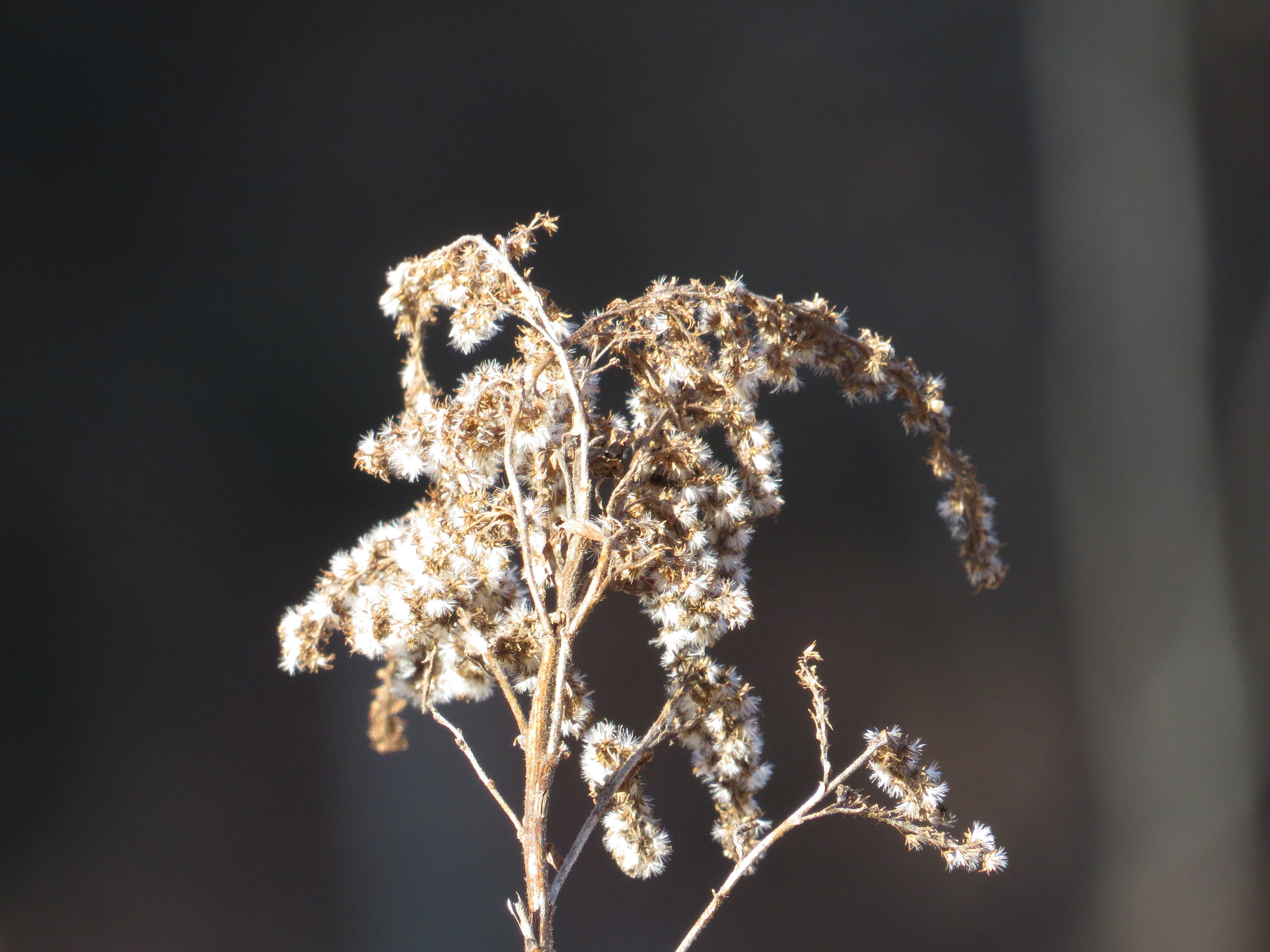
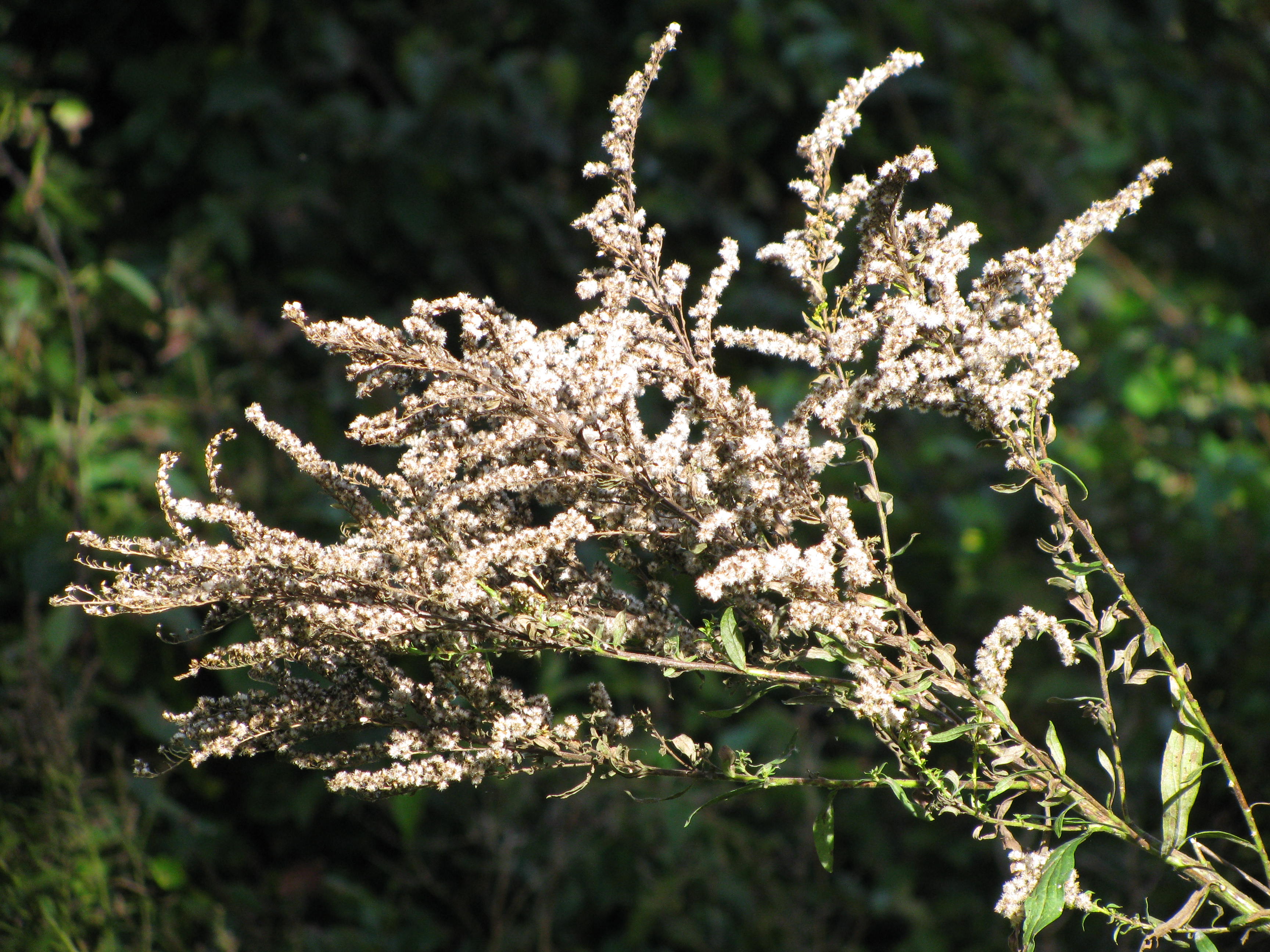
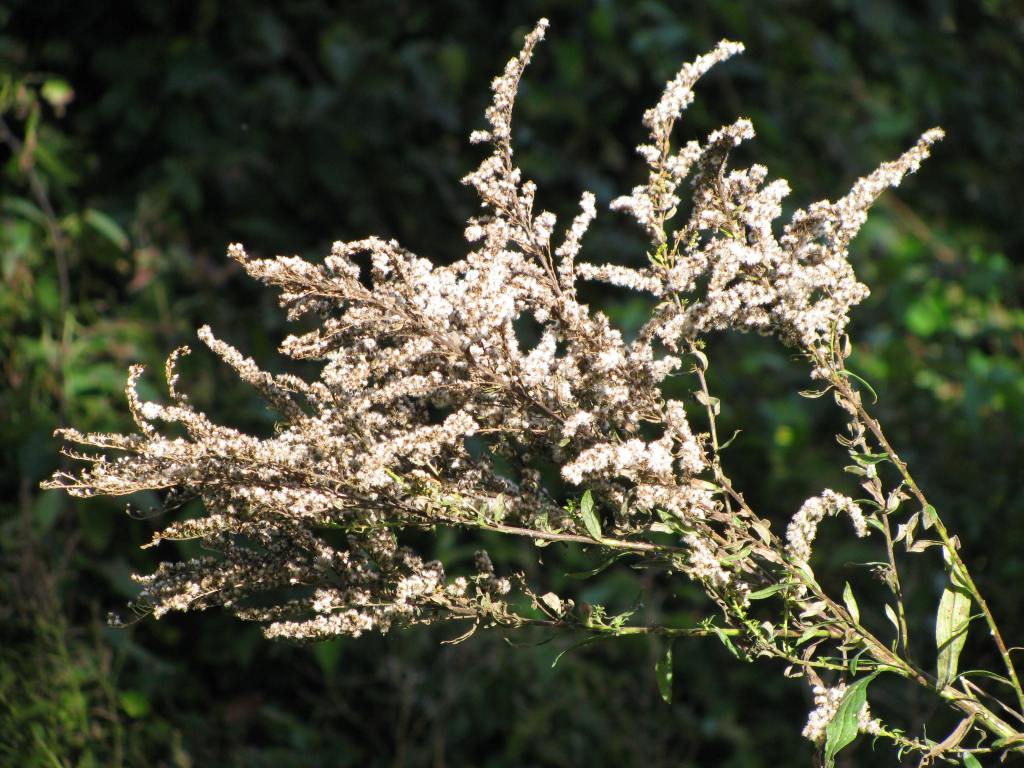
In winter, goldenrods are not golden. They are brown or pewter gray, the seeds lingering or gone, the cells dead, with no green remaining.
Yet they stand – at least some – and remind us of the tall weeds of summer. They stand because they are strong, as solid as their name Solidago. This winter in New England, one of our early snowfalls was wet and heavy, dragging many of the goldenrod stems to the ground. But not all. Some could withstand a weight that bent birch trees low.
Alas, these dead stems will not sprout again. They were the growth of the past year, not the future stems of the goldenrod. As the seeds mature and the stems die, the plants turn brown. Then they slowly fade to gray as the seeds disperse and the fragile remnants of the flowers fall away.
But spring will bring another chance for the stems to harbor life, another year to be part of the field community.
Once it becomes sufficiently warm (a warmth that you might consider cold), spiders will emerge from their winter dormancy and use the bare branches of dead inflorescences to build their webs. Two kinds of spiders use old goldenrods frequently, small orb weavers (the spinners of stereotypical spoke-and-spiral spider webs), and dictynids, a family of small, inconspicuous spiders that construct a tangled mishmash of a web and hide in the middle. I will try to get pictures of these spiders in the spring and share them. For now, imagine what they might look like on a dewy morning, the silk supported by the branches of dead flowers.
For much of the summer, dead goldenrod stems are among the tallest structures in a field, and there sit the spiders, waiting for their food. Flying insects, rising above the bulk of the green and growing plants, occasionally blunder into their webs. For a small spider, even a small insect is a good meal. Tall, dead stems give these spiders an excellent location for feeding.
There is another advantage for being on dead stems. They don’t attract one of the major enemies of spiders: spider-hunting wasps. Some wasps grab spiders and paralyze them with a sting. Then they store the helpless spiders in nests or cells where the wasp’s young will feed on the defenseless prey. Quite a few spiders live on flowers of goldenrod, and the wasps also feed on nectar, so blooming goldenrods provide one-stop shopping for the wasps.
But dead goldenrods have no nectar, and few spiders, so they are likely to be overlooked by the wasps. That’s a good thing if you’re a small spider.
Late in the summer, another kind of creature will sometimes climb up on dead goldenrod stems. These are the immature stages of small beetles in the genus Exema. The larvae feed on goldenrod leaves, but they look like the turds of large caterpillars because they use their own turds to build a dark brown case around themselves for protection (visual and physical). They hide inside their own excrement and grow slowly during the summer. As the season wanes, they are ready to pupate, and that’s when they seek a location that won’t be disturbed. Some of them wander on to the dead stems of goldenrods from years past. Perfect. The gray stems don’t have pollen or nectar to attract parasitic or predatory insects. While the enemies of the beetles go elsewhere, the pupae on the dead stems can develop in peace.
Standing dead stems do not remain standing forever. When they finally topple – and they all topple eventually – they will decay back into the soil. It’s part of the life cycle of a perennial herb.
Goldenrods (species in the genus Solidago) appear to be indigenous on at least three continents, North and South America, and Eurasia, and perhaps a fourth, northern Africa. John Semple at the University of Waterloo has a map of this worldwide distribution on his website: https://uwaterloo.ca/astereae-lab/research/goldenrods.
There is one widespread indigenous species in Eurasia, S. virgaurea, though it is so widespread and has so much recognized variation that there could well be multiple species. There are also a half dozen indigenous species in far eastern Asia.
There is no universal agreement among botanists about how many species of goldenrod exist in North America, but they all agree that there are a lot of them. While you might think they all look alike (and many do), there are some surprising differences among all these species, and I hope to explore some of these differences in future posts.
Let’s look at something seemingly simple: where do they grow? The Natural Resources Conservation Service of the United Stated Department of Agriculture (USDA) maintains a database on plants in the United States and Canada. For each species that they recognize, they have a map of where it grows.
So let’s look at goldenrods. I’m using the common and species names from the USDA.
For each species, you might have to scroll down a bit for the map. But then, you can play with the scale bar and zoom in on each state. When you zoom in, many of the maps show the occurrence of the species in each county. Some of the county distributions are quite surprising.
What you will see in these maps is the result of considerable speciation and adaptation among goldenrods. Some are widespread generalists, some narrow specialists. Specialization might include temperature, soil moisture, soil type, shade tolerance, elevation, latitude, proximity to the coast, or some combination of these. We will explore some of these specializations in future posts.
Back in 2021, I pasted all these links to maps into this post. Now, the links don’t seem to work, even though at least some of the maps still exist. If you want to find a map, try searching for the formal name of the species. I’m sorry that the easy path to the maps has broken.
Atlantic to Pacific: these species stretch all the way across the continent (sometimes just barely).
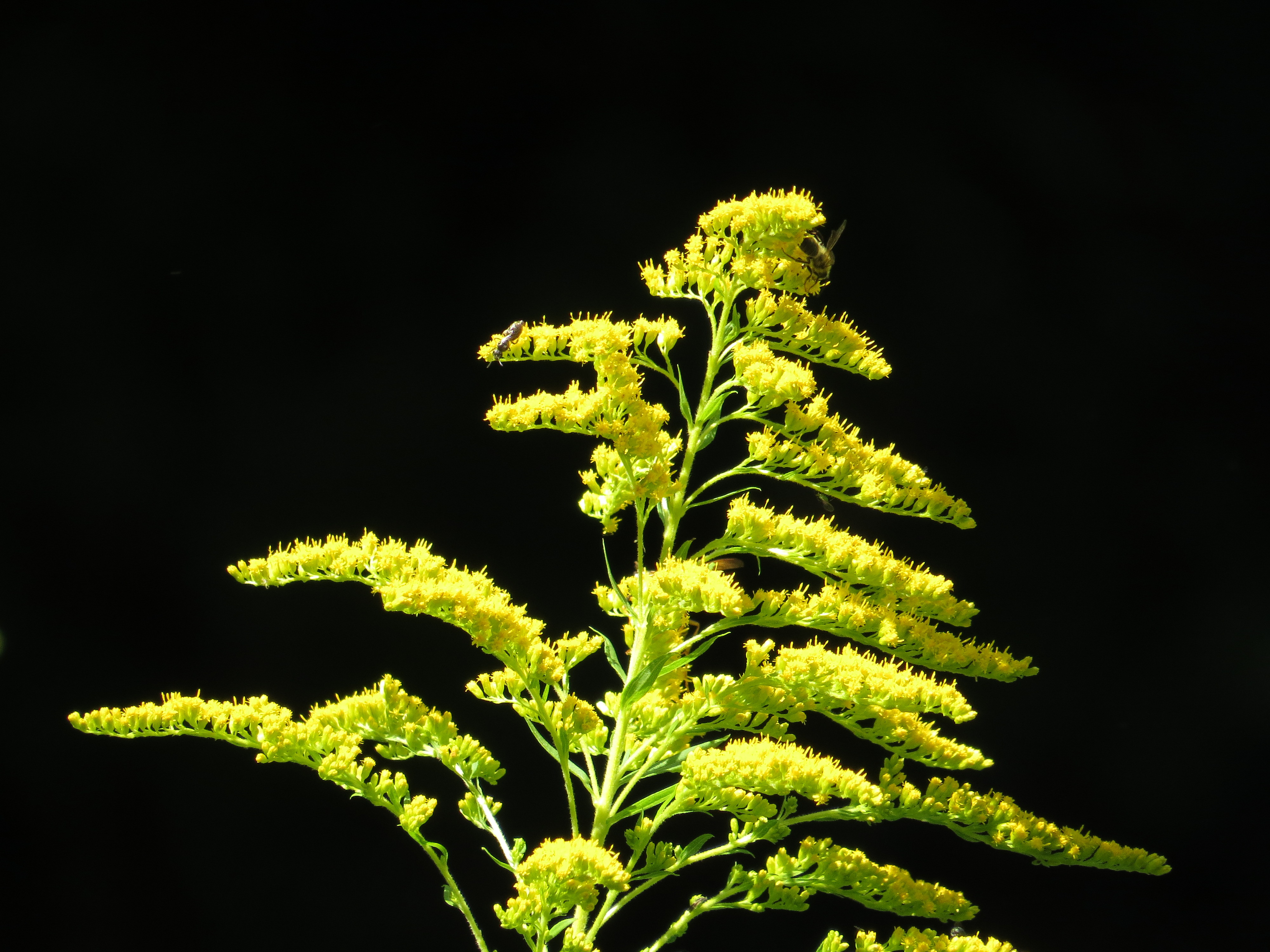
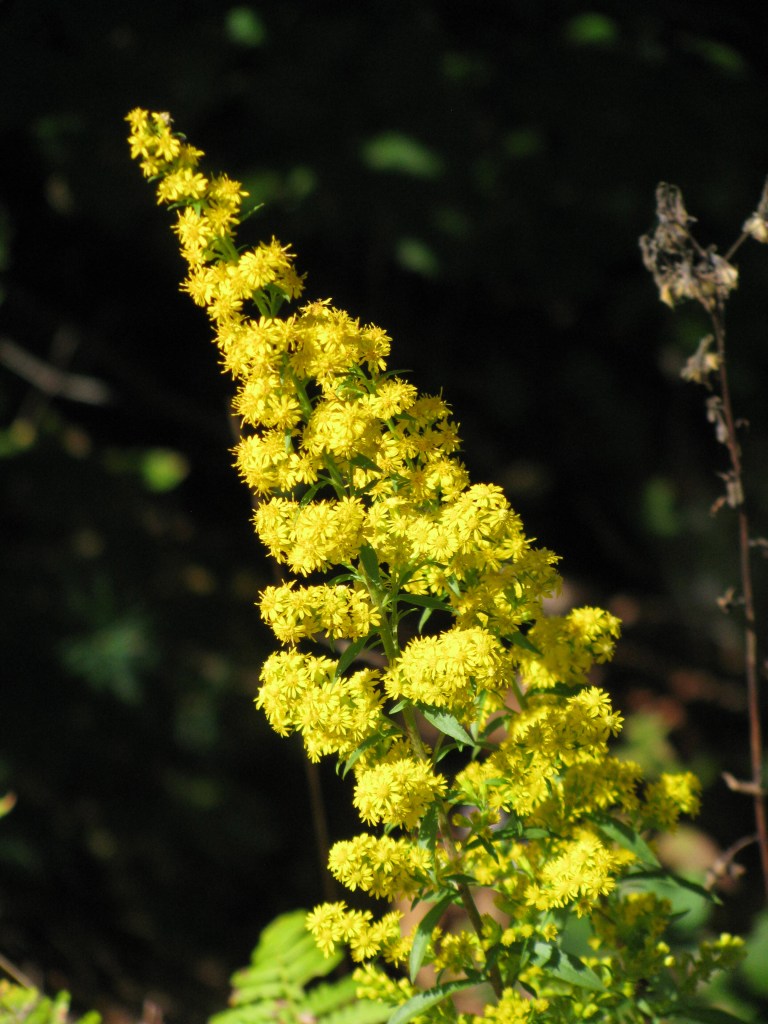
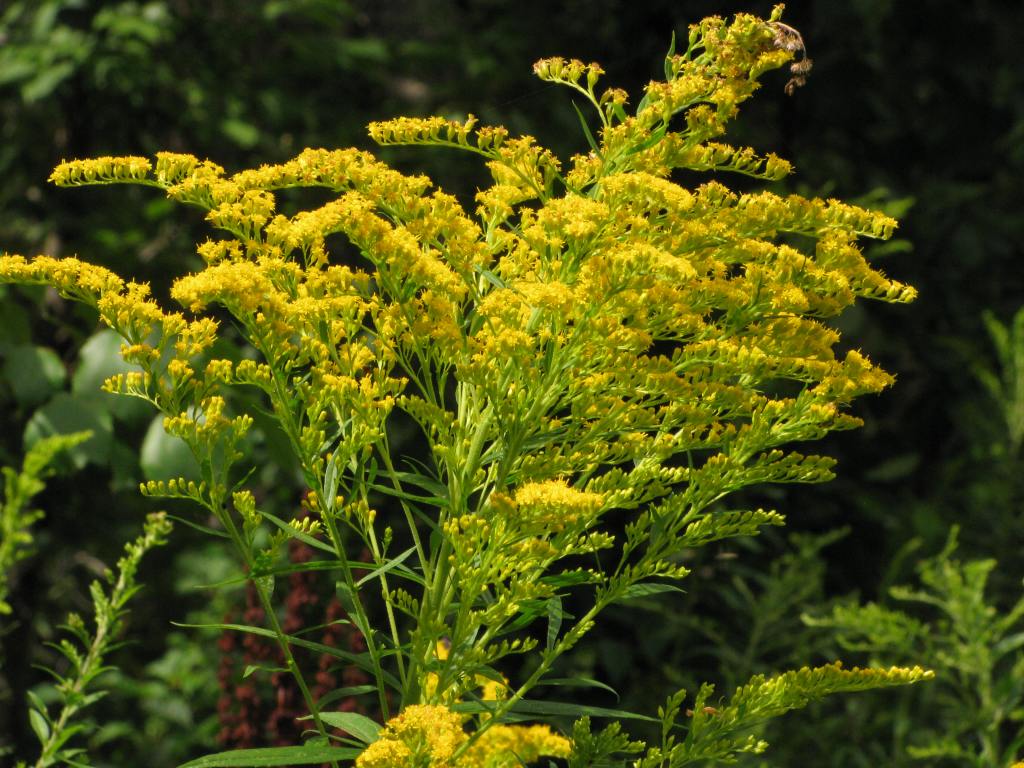
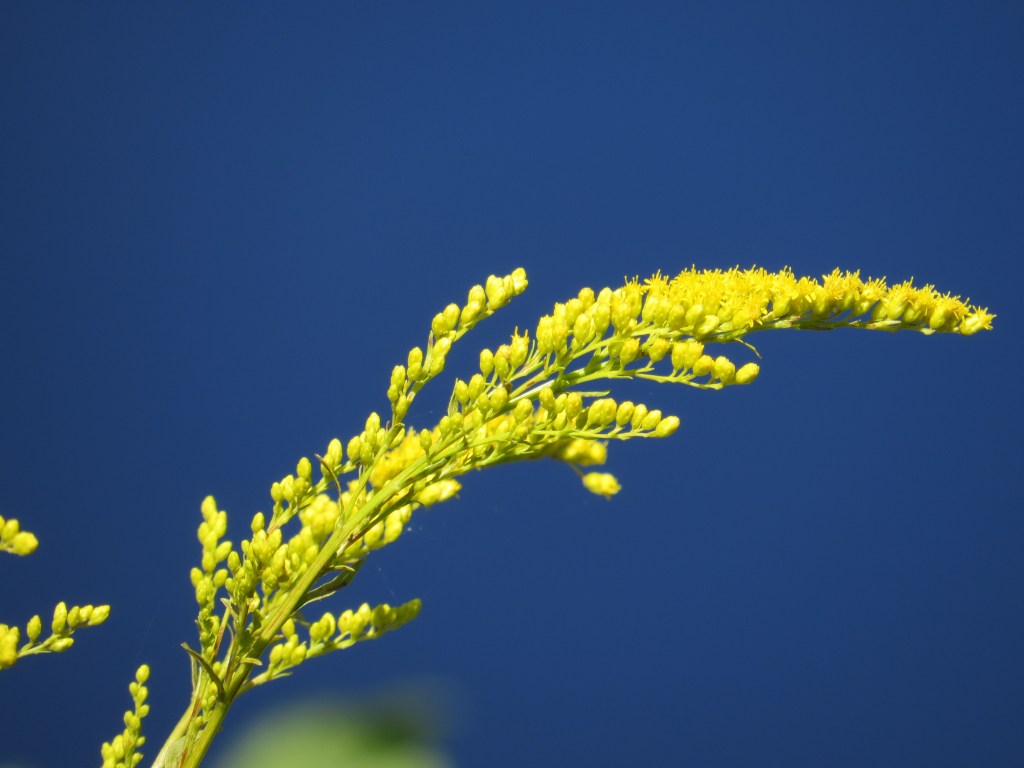
Goldenrods are mostly tall and showy plants with yellow flowers – rods of gold. In French, they are called verge d’or, batons or sticks of gold. Where they are indigenous or introduced, they are often among of the most conspicuous wildflowers of summer. Their flowers are blamed (without justification) for stimulating allergies. Their leaves and stems contain fragrant resins. As weeds, they quickly overtake abandoned farm fields, and are invasive in many parts of the world. Their flowers produce huge numbers of wind-blown seeds, yet the plants are perennial.
Dozens of species of goldenrods arose from a common ancestor, and this group has been given the technical name Solidago. The name begins with Latin (and English) for “solid,” and they are indeed tough weeds. The name might also refer to the “solidus,” a type of gold coin minted by the Roman Empire. The suffix suggests healing properties, in agreement with another common name, “woundwort,” applied to goldenrods and other herbs used to treat wounds. Like the coin, the weed was golden and could be trusted.
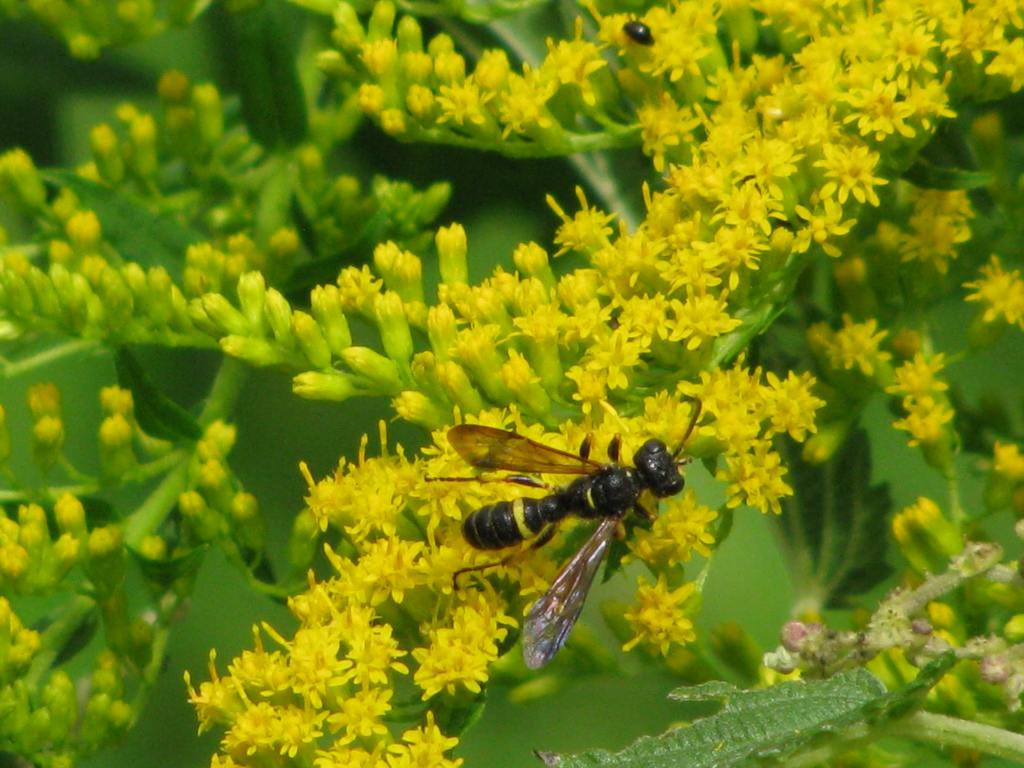
In pastures, livestock avoid goldenrods, yet there are many species of insects that eat them, sometimes only them. Spiders spin webs on them or between them, or spin no web at all and use the plant as a platform for hunting. Bees and butterflies (and more) visit the flowers by day, then moths and male mosquitoes (and more) visit by night. Other arthropods, some of them tiny, inhabit portions of the plant, above and below ground.
Following the lead of many other researchers, writers and bloggers, I will explore the world of goldenrods. I hope you find something that interests you, and that will allow you to explore goldenrods, and other things, on your own.
It can be tricky to identify some species of goldenrod, but there are several guides to help you. Flora North America covers (as the name implies) the entire continent, and it uses a two-part key for Solidago that will eventually get you to the species. This publication is the impressive effort of many botanists: http://www.efloras.org/florataxon.aspx?flora_id=1&taxon_id=130659
Gray’s Manual of Botany includes the species of eastern and central North America. Some of the names have been changed (taxonomists do that), but you can find the current name with a quick search on line.
Nathanial Britton and Addison Brown wrote An Illustrated Flora of the Northern United States and Canada, available in many libraries. The names are more likely to be out of date than those in Gray’s Manual, but the geographic coverage might be what you need.
For the northeastern portion of North America, try Flora Novae Angliae by Arthur Haines, a recent compendium of New England vascular plants; or A Field Guide to Wildflowers by Roger Tory Peterson and Margaret McKenny; or Newcomb’s Wildflower Guide by Lawrence Newcomb.
There are more specific guides or lists of plants for states, counties and regions, such as those published by the New England Botanical Club: http://www.rhodora.org/specialpublications/publications.html. These might be just what you need to confirm whether a species of goldenrod is known to grow in a particular location.
Bladderwort is a tough name. Yes, it has bladders, and someone might have thought it had medicinal or food value back in the day. But the formal name is so much better: Utricularia. I will use that.
Utricularia has been in the pond for years, but I didn’t notice it until 2016, when it was superabundant. There are multiple species in the genus, and I’m not sure which one(s) constituted the near carpet on the pond back then. At least some of them were Utricularia inflata, but most were probably something else.
When they are blooming, they are impressive. The flowers are supposed to be yellow (one species is purple, and I’ve seen that on another pond), and some of them are bright yellow, but most are mostly white with only a hint of yellow. That’s another reason why I am unsure what species are present.
July 2016
Whatever they are, these plants, as a group, are highly variable in abundance, year to year, as least in the portion of the pond that I visit. I don’t know why, but I wanted to document this variability, at least visually.
Look at how they have changed in abundance in this part of the pond. The peak seems to have been 2016, though pictures from earlier years show that they were present. Since 2016 (left), the numbers have declined (2017 in the center, 2020 on the right).
Why have they declined? I don’t know. Will they become abundant again? Probably, because there was a bit of a resurgence in 2018. Will they disappear? I hope not.
Update 2021
Utricularia is essentially gone from the pond. I saw none in 2021. I might have missed some if they were hidden among other plants, but there is no question that their population has, in a word, crashed.
I didn’t expect such a radical fall in numbers, but then, I hadn’t foreseen such a radical rise in 2016. We should add Utricularia to the list of species that fluctuate dramatically in abundance. There are some hypotheses about why other species rise and fall so spectacularly: diseases, resources, predators, something called the Allee effect (a requirement for a minimum number of individuals before the population can take off), and more. I don’t know enough about Utricularia to say whether any of these hypotheses – or something else – is relevant. And bladderwort abundance is obviously hard to study because the numbers keep changing, and sometimes they are missing. But it still might be worth a try.
No, this is not where you escape the heat of the summer. This is the beginning of summer heat escaping from the pond.
It is 50 degrees this morning (10 Celsius), colder than it has been for months. Solar radiation has warmed the pond while the sun has been high and long in the sky. But now, we are closer to the equinox than the solstice, and things are beginning to change.
Water evaporating from the still-warm pond has condensed in the cool air above it, leaving wisps of mist to drift above the surface. As it condenses, heat escapes into the atmosphere and into space. Days ahead will produce more contrast and more mist, but here we can see an early loss of heat, the inevitable manifestation of the seasons.
Summer is making its escape as days shorten, warmth fades, and the tilted Earth continues on its orbit, the north pole of the axis pointing less directly at the Sun. It happens every year.
As we watch the heat go, the southern hemisphere watches it arrive. Welcome to the symmetry of the sphere.
Whirligig beetles live in a plane, the surface of the pond. They can dive and they can fly, but much of the time that the pond isn’t frozen, they dwell half in air and half in water.
In their realm, they are dark, fast and unpredictable. Sometimes they make ripples, sometimes they don’t. Sometimes they are alone, other times in groups or queues. The family name is Gyrinidae, and they do gyrate. And then they immediately do something else.
The beetles have compound eyes like nearly all adult insects, but one pair is underwater and the other pair above. There are other beetles that also have four eyes (including longhorn milkweed beetle), but it is pretty rare among insects. Their odd eyes allow them to see both up and down.
Shaped roughly like a cough drop, they have no trouble floating and zipping around. Their body surface is water repellent, making them resistant to sinking, so their brief dives take a lot of energy (though coming back up does not). The hind legs are strong and precise thrusters, and probably expend the most energy per unit time on their brief dives. While on the surface, the legs can change speed and direction astonishingly quickly. It is often impossible to tell what, if anything, has stimulated these changes in locomotion.
They feed on small animals, alive or dead, that get stuck in the surface tension of the pond. There must be a lot of insect life in the pond to support so many hyperactive beetles.
Most people would describe the larvae as worm-like, but the legs are well developed and allow them to walk on rocks and dead leaves and mud underwater. The jaws are wicked sickles of death, so these beetles are predatory for their whole lives (not that unusual, but some other types of beetles switch to different foods when they mature). The larvae have hair-like gills on their abdominal segments, which might be mistaken for legs at first glance. These are well-adorned bugs.
The larvae blend in with their surroundings but many fall prey to swimming enemies. The adults appear to be sitting ducks for fish, turtles, frogs, snakes and other aquatic vertebrates, and some do get snapped up by these predators (sometimes diving is an attempt to escape). But adult whirligig beetles have glands that secrete a white fatty material, and for many large predators, this goo appears to taste terrible. The late Tom Eisner and his students smeared the secretions on mealworm larvae, insects that fish typically gobble up readily. But smeared mealworms were spit out immediately, or after being manipulated for some seconds (probably in an effort to flush the nasty material off of the larva). The sticky white stuff is almost certainly a defensive adaptation for the adults, and judging from their abundance, it mostly works.
Whirligig beetles appear on the surface of the pond early in spring and hang around well into autumn. I don’t know how many generations they have each year – maybe only one, maybe more – but as a group, they are an omnipresent component of the aquatic fauna.
Zipping around on the surface of a pond is not a manner of living that I would ever have pictured as a pathway to success, but they have made it work in spectacular fashion – spectacular, that is, if you pay attention to the little critters that make up in numbers what they individually lack in body mass. And when the pond freezes, the larvae do well below the ice. Come spring, they mature and the adult beetles appear as a frenetic assemblage of water sprites. And like the mythical sprites of folklore and fairytales, they can fly. How else would they get to a pond near you?
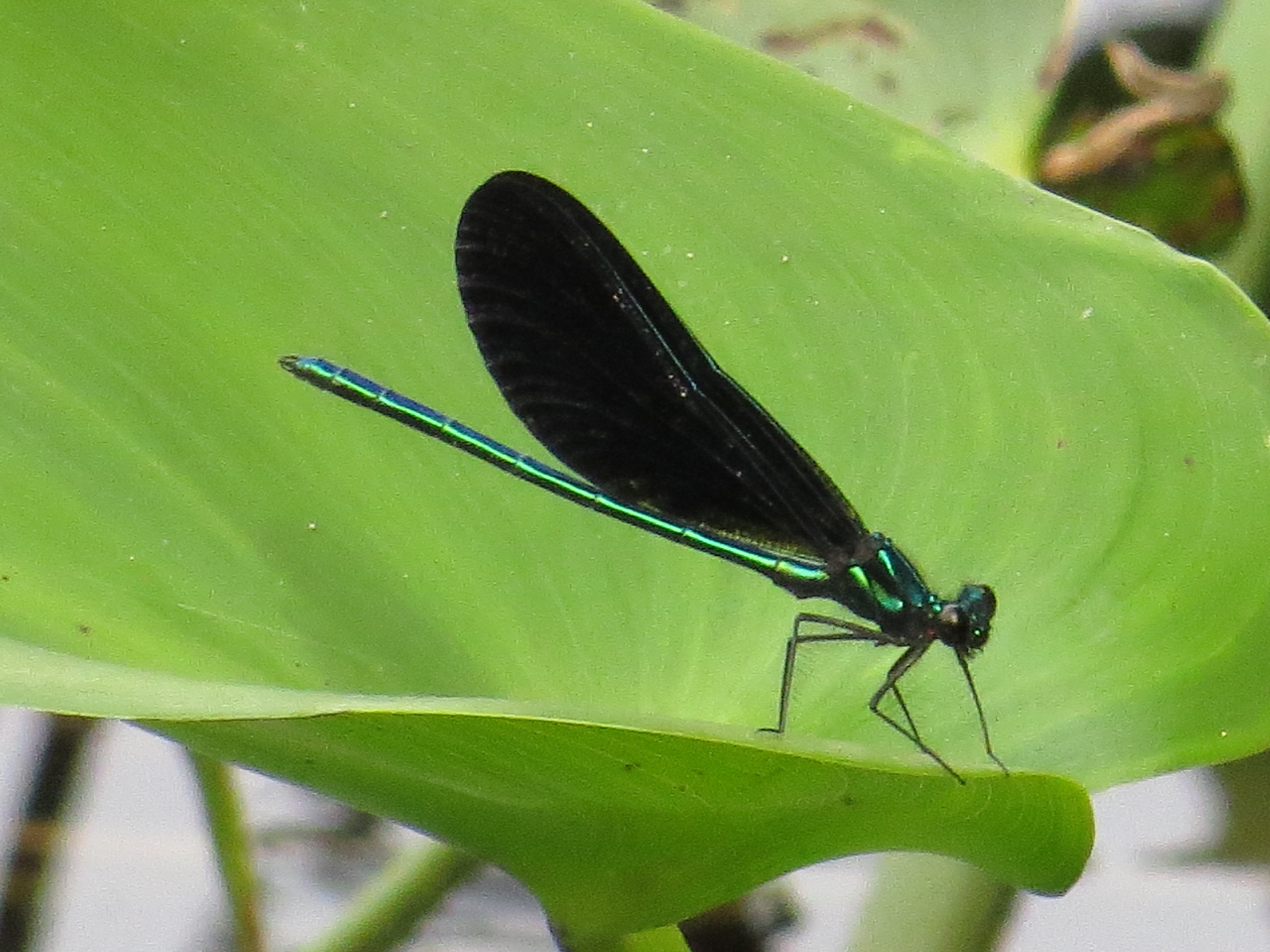
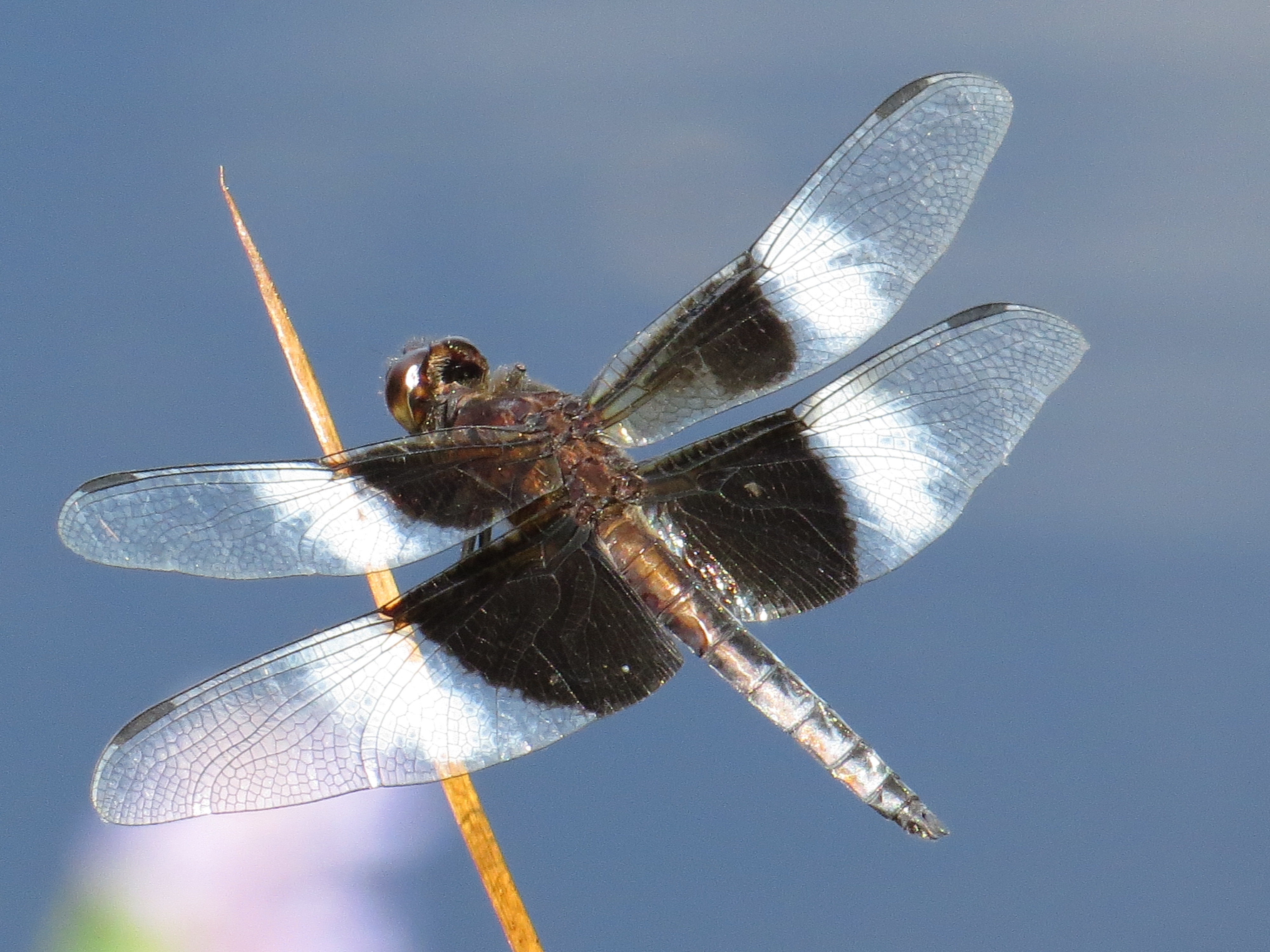
I mean dragonflies and damselflies, the insect order Odonata. These are much older than fairy tales, and are definitely real. They go back to the Carboniferous, when some of them were huge, with a wingspread of an owl.
Today, they are some of the largest insects around us, flying with stupendous agility. They fly after prey, and after each other, patrolling their territories and seeking mates. Some sit on perches, while others seem never to settle (although they all land at night, and in the morning, need to warm up before they can take to the air again).
The eggs hatch in ponds or streams and the nymphs are serious predators, even those of delicate damselflies. Most have one generation a year, staying safely in the water in winter. At the right time and the right size, they crawl out of the water and transform, in a single molt, to winged jewels.
Their eyes are huge and, judging from their precise behavior, their vision is acute. As you watch them, they are watching you, along with everything else around them. They can even recognize landmarks that define the limits of their territories. Success depends on being aware of their world. They appear to be very aware.
Some of them stay close to their natal water, but others venture farther afield in search of food. Their wings shine and sparkle in the sunlight as they fly with no conspicuous effort. On a perch (a branch, a grass stem, the ground, a clothesline, your shoulder), some will let their wings droop, just a little. Resting when they can, they can be back in the air in an instant, evading birds, catching bugs, staying alive.
After they mate, the female lays her eggs in the water, and a new generation of nymphs will hatch. Not all will survive, but each year, they sustain the populations of a dozen or more species in the pond. And each year, we marvel at their appearance.
Every year, there are yellow globes just above the surface of the pond. Flowers. There are at least two kinds of lily pads in the pond, and this one blooms first. There were not many of them in past years, but they are more abundant this spring than before.
These flowers, along with those of other lily pads, are atypical for flowering plants. There might have been more flowers of this type long ago, but most contemporary flowers are less bulky, less fleshy, more slender, more accessible. Nevertheless, Nuphar persisted, and its persistence is testament to the success of the unusual. It doesn’t always happen that way, but these flowers are tough.
Many aquatic weeds appear to rise from the muck of death and decay to bloom above the water. This ability seems magical, even miraculous, with its hint of resurrection. Yet this is what rooted plants do – grow in a medium of decay and rise above it. But doing so from mere soil seems mundane. It is only when they emerge from the depths of a pond or – even more impressive – stagnant water, that we attach special significance to them.
And it is right and fitting that we do so. Humans cannot survive underwater for long, and we cannot survive at all having our bodies mired in aquatic mud. Yet here are vigorous and vibrant plants thriving where we cannot. For them, it is how they live. For us, it is astonishing that they can live, and be so beautiful, in such a repugnant place.
The colorful flowers last for a while, and then, if pollination has been successful, the plants switch to the production of seeds and fruit. With luck, the seeds will disperse and there will be more water lilies in the future.
After several years of being conspicuous but sparse, Nuphar is increasing in the pond. I have no idea why. Perhaps the pond is a bit shallower every year, filling up with sediment from upstream, and finally, that is favoring them. I doubt that they like the warmer weather because they are found up to northern Canada but don’t make it south beyond Maryland. Maybe it just takes them a while to get established.
Whatever the reason, the yellow globes brighten the pond, and I will admire their beauty as summer approaches.
Just yesterday, there was snow. We’ve had snow in May this year, more than once. There is much indignation.
But snow does not impede life in the pond. Water moderates all. Sunlight penetrates the water and energizes the plants in the shallows whose roots have waited all winter. Their new growth is not merely underway, it has begun to reach the surface. Their leaves will set up shop in the sun, absorbing all the light they can, making new leaves, new stems, new flowers, and new life.
They don’t have to reach up far, but reach up they do, to greet the light.
Lily pads reach the surface, spread out and bask. They take in air on the upper surface, unlike nearly all other leaves, but that’s where the air is. They support the air spaces in their leaves with big, spiny, wicked-looking cells that act as scaffolding. And their veins are tough, splaying out and keeping the leaf flat on the surface. Adaptation.
Emergent plants rise above the surface and stick up into the air. And into the sunlight. They have to have tough stems to deal with the water surface when it gets rough in the wind. Their stems are tough. Adaptation.
They all send flowers into the air, beautiful flowers coveted by botanical gardens for their pond displays. Brilliant colors rising out of the muck. The metaphors are endless. And insects covet the flowers up there above the water. The insects pollinate the flowers. Adaptation.
All this happens quickly before the leaves and stems get chewed up by physical wear and tear and by animals that like to eat plants. Impressive.
And today, it’s breaking the surface for a new season.

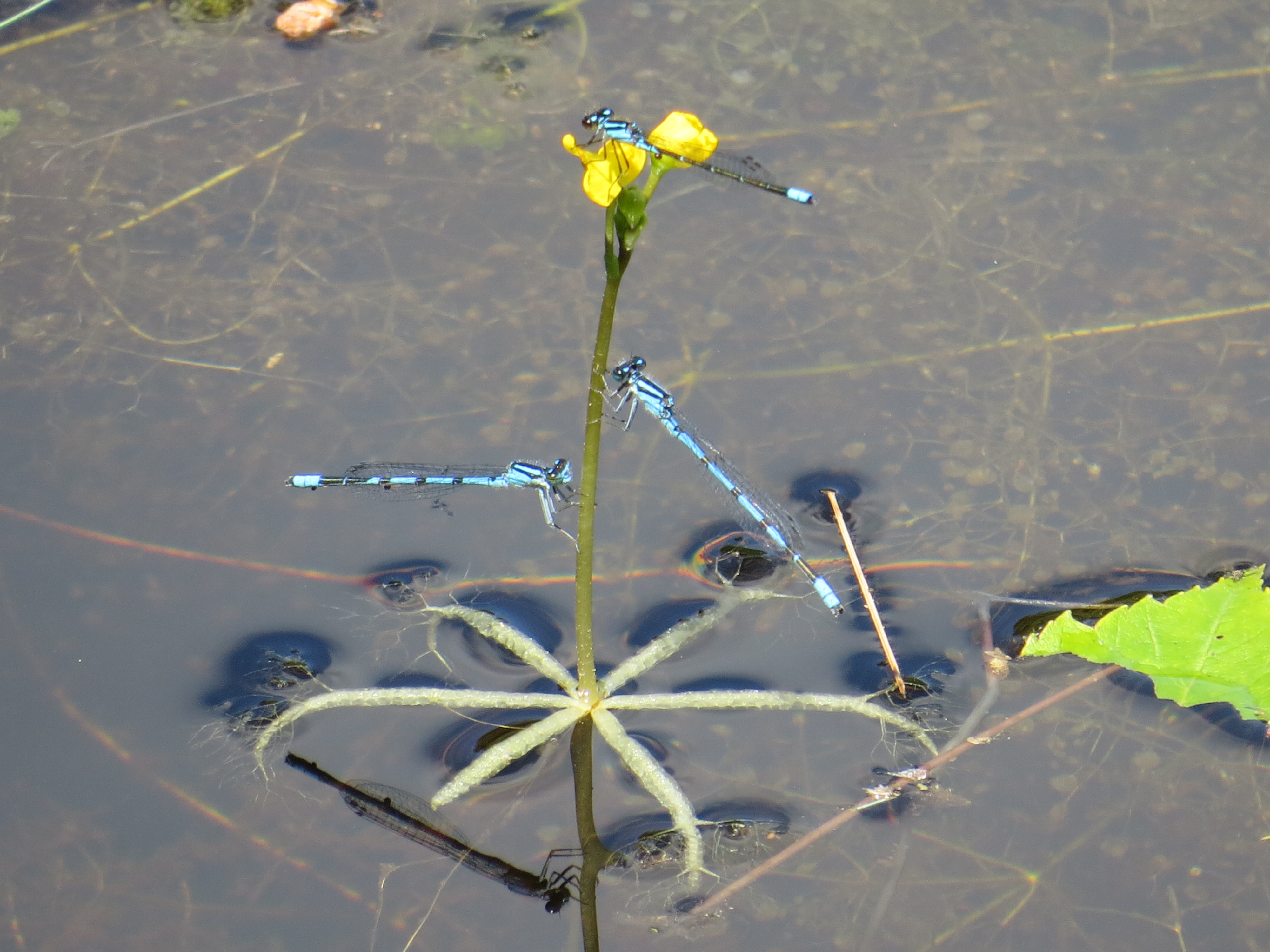 Utricularia has been in the pond for years, but I didn’t notice it until 2016, when it was superabundant. There are multiple species in the genus, and I’m not sure which one(s) constituted the near carpet on the pond back then. At least some of them were Utricularia inflata, but most were probably something else.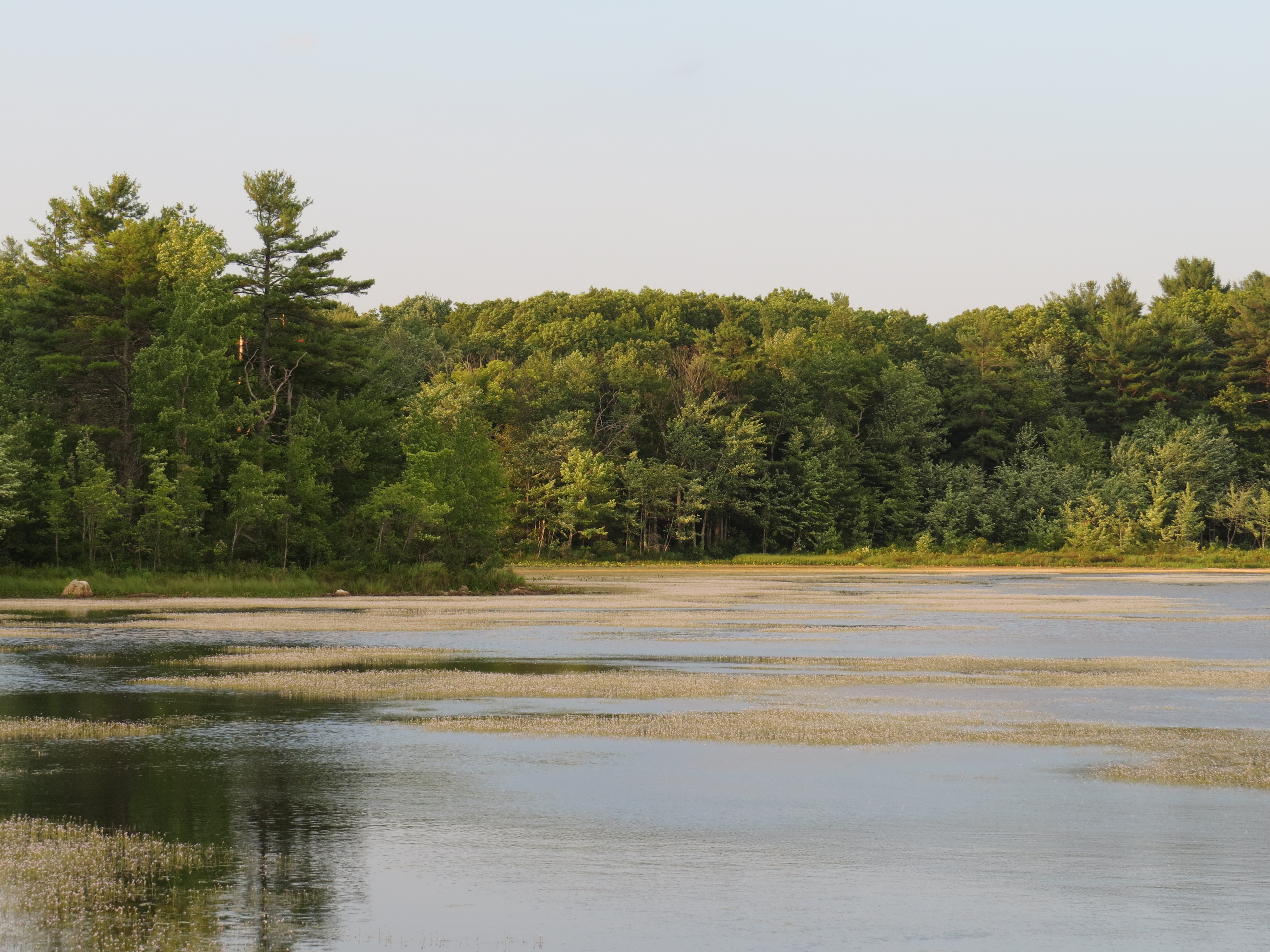


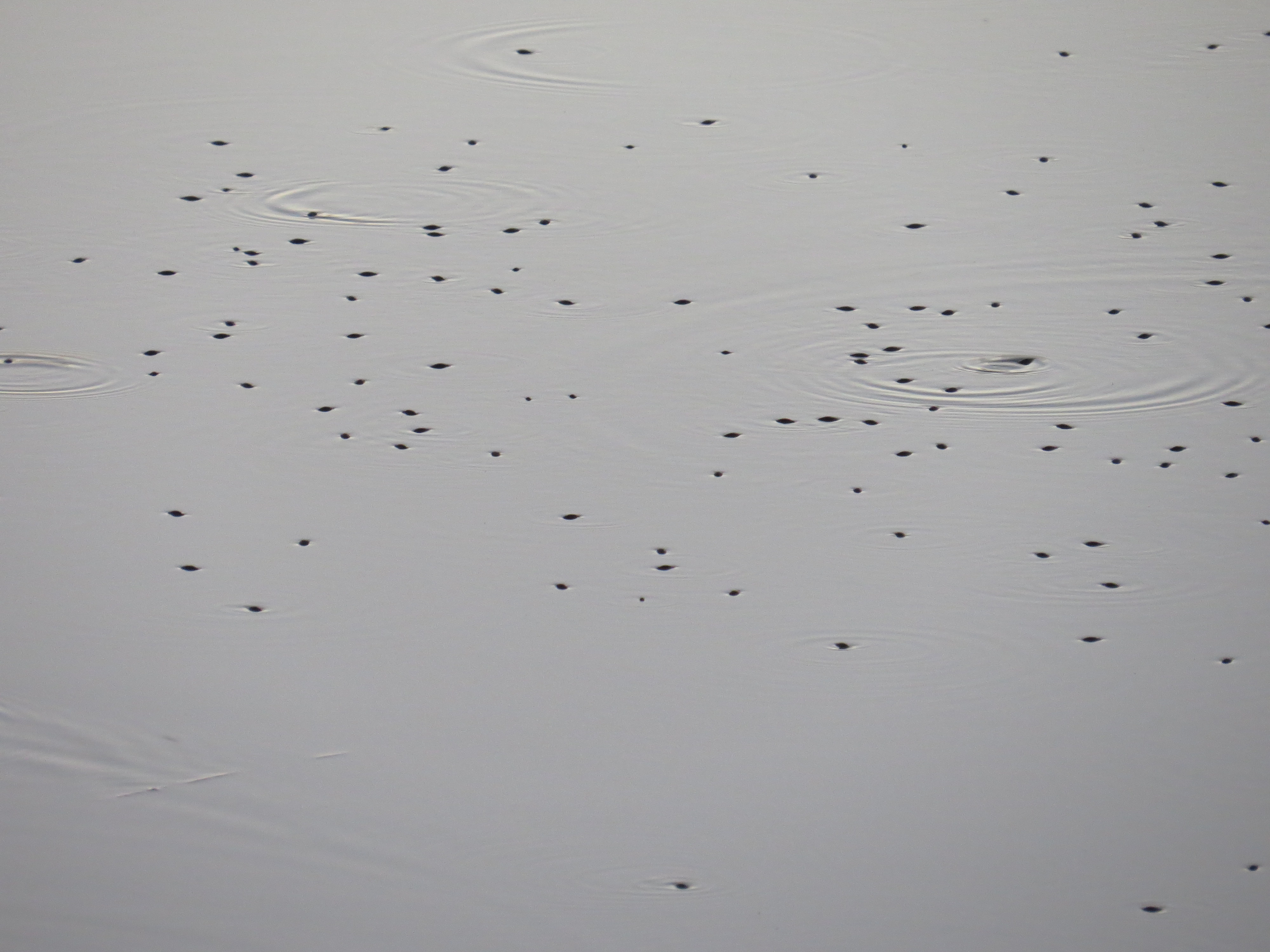 In their realm, they are dark, fast and unpredictable. Sometimes they make ripples, sometimes they don’t. Sometimes they are alone, other times in groups or queues. The family name is Gyrinidae, and they do gyrate. And then they immediately do something else.


 The eggs hatch in ponds or streams and the nymphs are serious predators, even those of delicate damselflies. Most have one generation a year, staying safely in the water in winter. At the right time and the right size, they crawl out of the water and transform, in a single molt, to winged jewels.


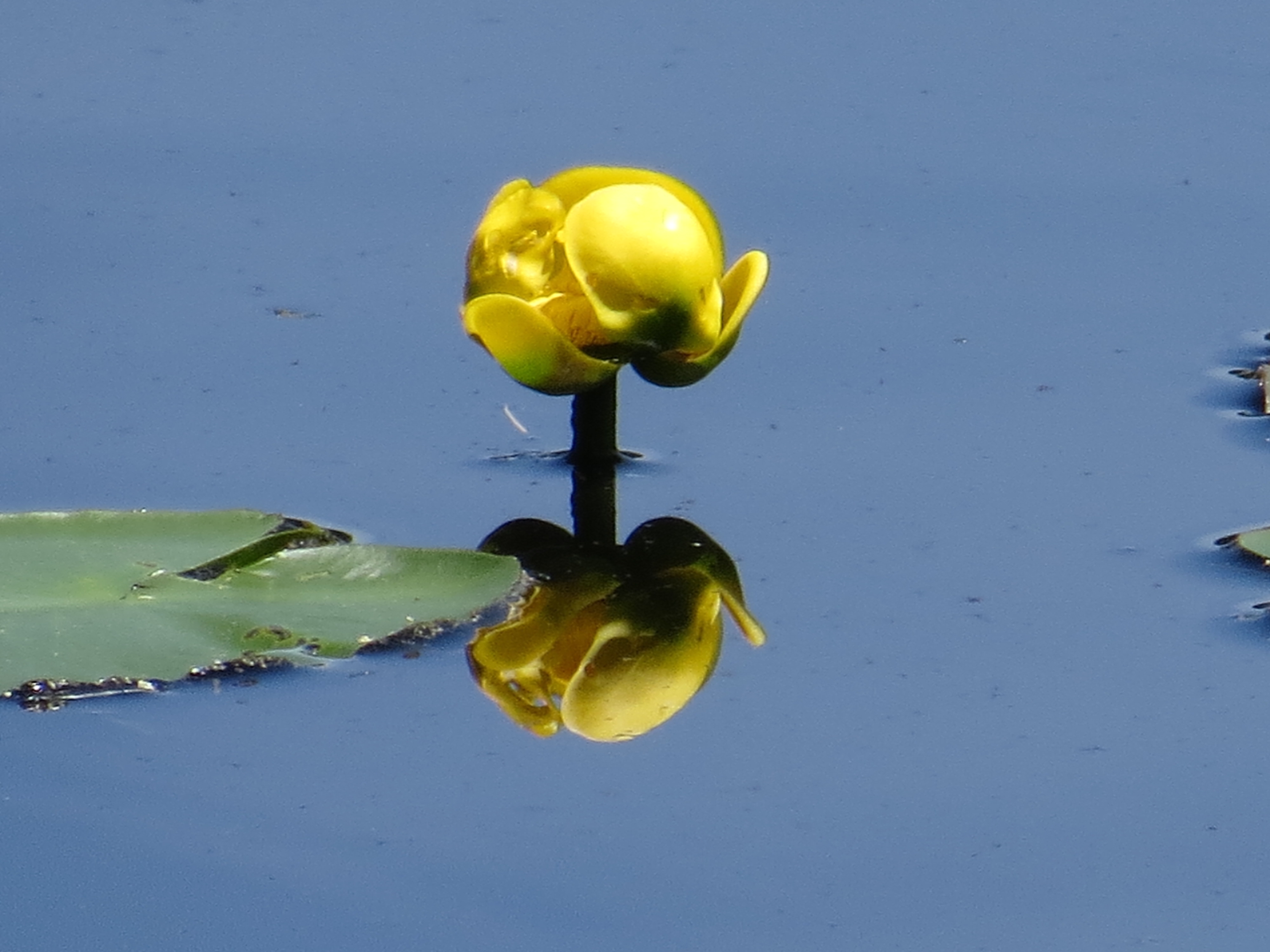 Every year, there are yellow globes just above the surface of the pond. Flowers. There are at least two kinds of lily pads in the pond, and this one blooms first. There were not many of them in past years, but they are more abundant this spring than before.
 After several years of being conspicuous but sparse, Nuphar is increasing in the pond. I have no idea why. Perhaps the pond is a bit shallower every year, filling up with sediment from upstream, and finally, that is favoring them. I doubt that they like the warmer weather because they are found up to northern Canada but don’t make it south beyond Maryland. Maybe it just takes them a while to get established.
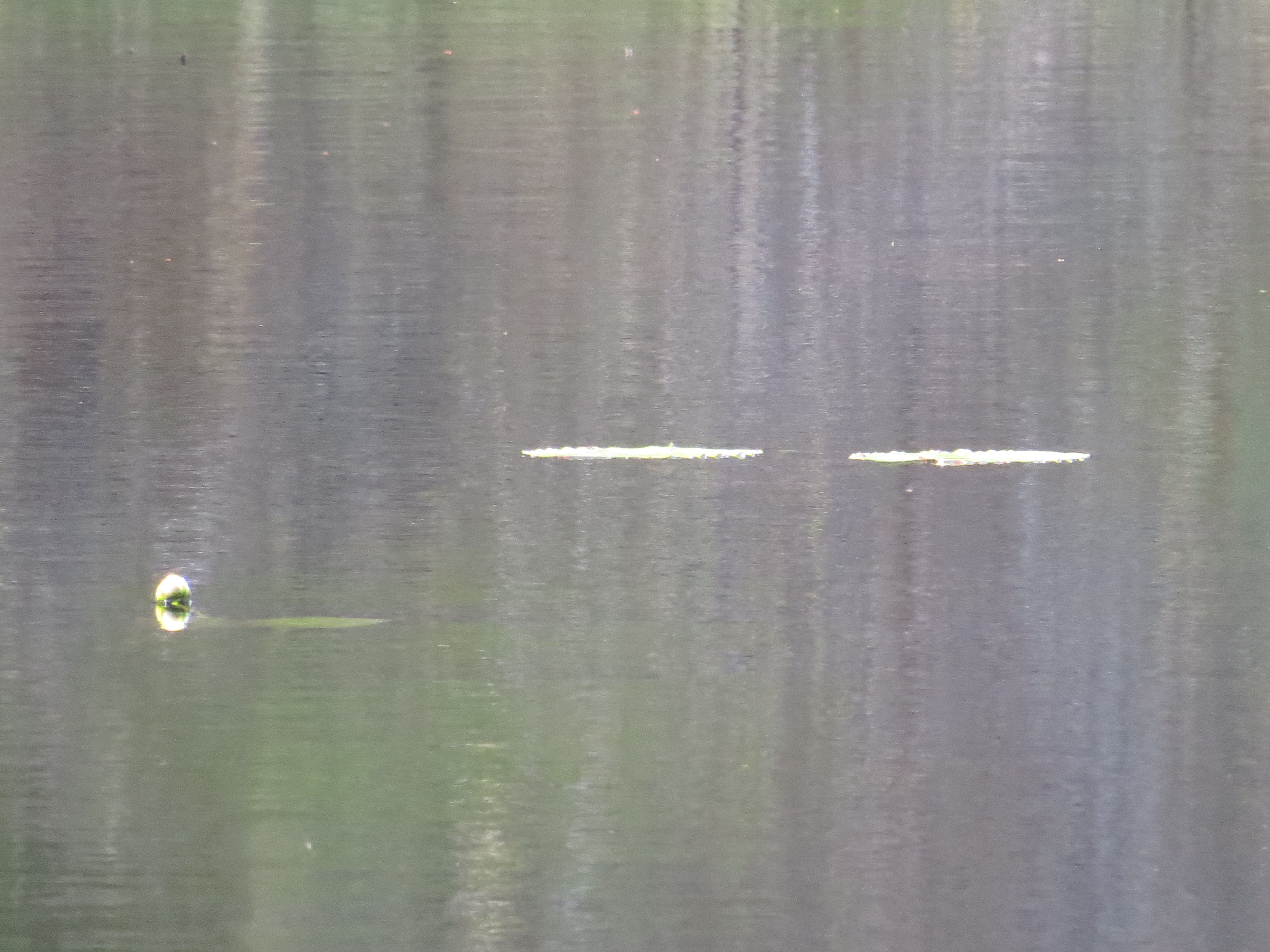 They don’t have to reach up far, but reach up they do, to greet the light.
 They all send flowers into the air, beautiful flowers coveted by botanical gardens for their pond displays. Brilliant colors rising out of the muck. The metaphors are endless. And insects covet the flowers up there above the water. The insects pollinate the flowers. Adaptation.
