Search

Owen Sholes

Living in the New England countryside

Tag

nature

Rarely a Pool

There is no pool in July.  It is dead leaves and dust in a shallow depression.  There are no understory plants, no young trees, just the shade of larger trees on the edge and in the high spots within the space.  It is easy to walk through this dry spot, unlike the surrounding woods with young trees and fallen wood.  

In autumn, it might get damp.  But in winter, it fills with snow.  One dry winter almost left it empty, but right at the end, a storm come through.

And then there is spring.  It thaws, the water is full of dead leaves, it darkens like strong tea, and things begin to wake up.  There are no leaves on the trees so the sunlight penetrates the murky water. Mosquitoes are common, as are beetles of several kinds, and the occasional water boatman.  Phantom midge larvae bend and straighten in the brown water.  Egg masses appear, frogs certainly, and maybe salamanders.  I don’t obsess about the amphibians the way some people do, but these eggs are impossible to miss.  They are colorful in their jackets of jelly.

But the headline attractions are fairy shrimp.  They are orange and green and some other colors, with patches of iridescence.  They are pretty big as adults (up to 2 cm), and slow, and they swim upside down.  The males have weird appendages that resemble elephant trunks.  Both males and females eat whatever they can find in the stew of organic debris, grow fast, mate, produce eggs, and die.  It’s over quickly.

It has to be.  The pond is drying.  There is no outlet stream, so no fish can reach it.  And no fish can live here when it dries up.  The pond creatures would be gobbled up quickly by fish, so this is one of the few places they can succeed.  But there is a price for safety, and that is time.  There isn’t much time.  Get your breeding done, and leave (if you’re a flying or crawling insect or a metamorphosed amphibian), or go dormant.

There are fairy shrimp eggs in that dust of July, in the soil and leaves, waiting.  Summer is too soon.  Autumn is too dry.  Winter is too cold and frozen solid.  Only spring will do.  Once a year, spring is the season of explosion.  Live fast, and go out in a blaze of glory. 

When there are sharp seasons of the year, there will also be sharp rises and falls of growth, life, breeding, and death.  If you can’t cope, get out.  Come back when it’s better.  And if you can cope, then congratulations on evolving a weird life cycle.  Adaptation is alive and well in a vernal pond, and in every other thing around it.  

July: Tree Five

In December, 2008, a storm came through the Worcester Hills in north-central Massachusetts with rain that froze on every exposed surface, and strong, gusty winds.  Many trees lost limbs, some were snapped off entirely, or were bent horizontal to the ground.  We lost power for a week.  

Later that winter, I tagged dozens of oak trees on our property and estimated the amount of damage that they had sustained.  Four years later, I took samples from each tree and measured the thickness of their growth rings.  Tree five, a red oak, lost forty percent of its canopy, and though its annual growth before the storm often produced rings about one millimeter thick (occasionally much more), in the years right after the storm, the rings shrank to about half a millimeter.  The tree was struggling.

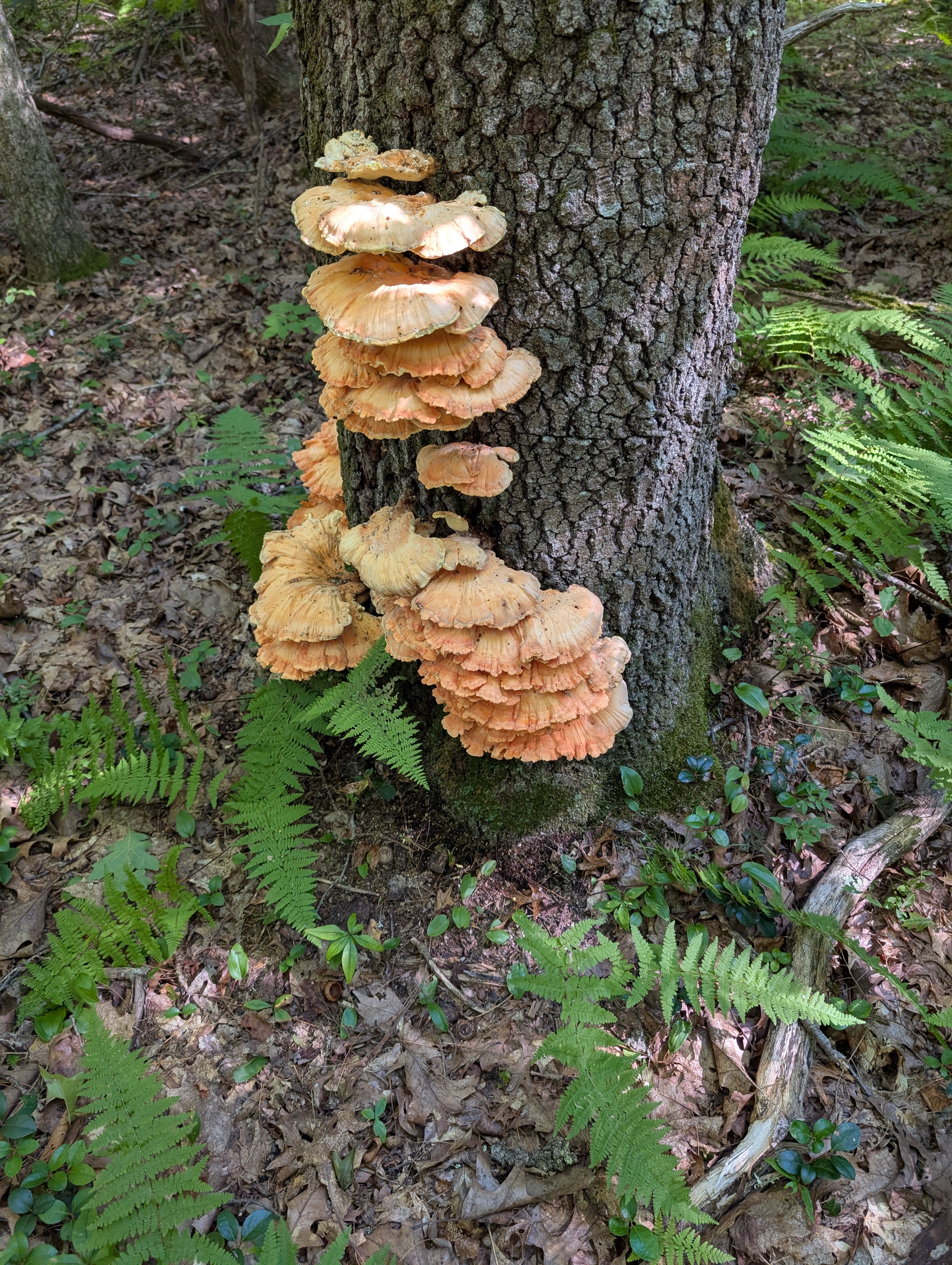
In 2025, seventeen years after the storm, tree five stood out among its neighbors because of a substantial growth of bright orange fungi.  It still had leaves, but it also had disease.  That is, disease from the perspective of the tree.  From the perspective of the fungus, life was very good indeed.

It had been a while since I had walked among the trees I measured after the ice storm.  I recalled passing easily through the woods, with fewer low branches than decades before, a moderate accumulation of fallen branches and trees, and a fair number of small white pines whose flexible branches were easy to brush aside.  Today, there were more fallen branches, and many of the small pines had dead branches, sometimes all the way up, and they were stiffly resistant to my passage.  

What was the source of the fallen branches?  Even the ice storm hadn’t left this profusion of limbs.  What would be the fate of the pines, still deep in shade, and now with fewer needles to support their growth?

The impression I felt was one of decline, of trees large and small shedding the branches they could not support.  In recent years, there had been dry spells, sometimes lengthy ones, during which at least one large pine had died, and more than one had dropped major branches (one of which crunched our small barn).  And while most of the trees damaged by the ice were still doing well, a handful were dying or dead, and tree five was unable to defend itself against invading fungi.  The ice demanded a price.

Things were changing.  Things always change.  But these changes, this decline, reminded me of a line from Robert Frost: “… what to make of a diminished thing.”  

I don’t know what to make of it.  I need more time.  I need to look at what remains more carefully to see a larger picture.  

At least as things were diminished, there were flames of fungi emerging from the base of the tree, this still-living tree, not going gentle into that good night.  

This winter, I will walk again, and see what I can make of it in the snow.

Is It Raining?

The sun has risen, the waning moon is bright white against a blue sky with only a scattering of thin, pink, fluffy clouds, and the autumn colors are beginning to catch the rays of the sun.  But as I walk along the road beside the trees, there is the distinct sound of drops – many drops, raindrops – hitting the leaves up in the canopy.  It rained yesterday, but this morning, there are no rain clouds anywhere nearby.  How can there be raindrops?

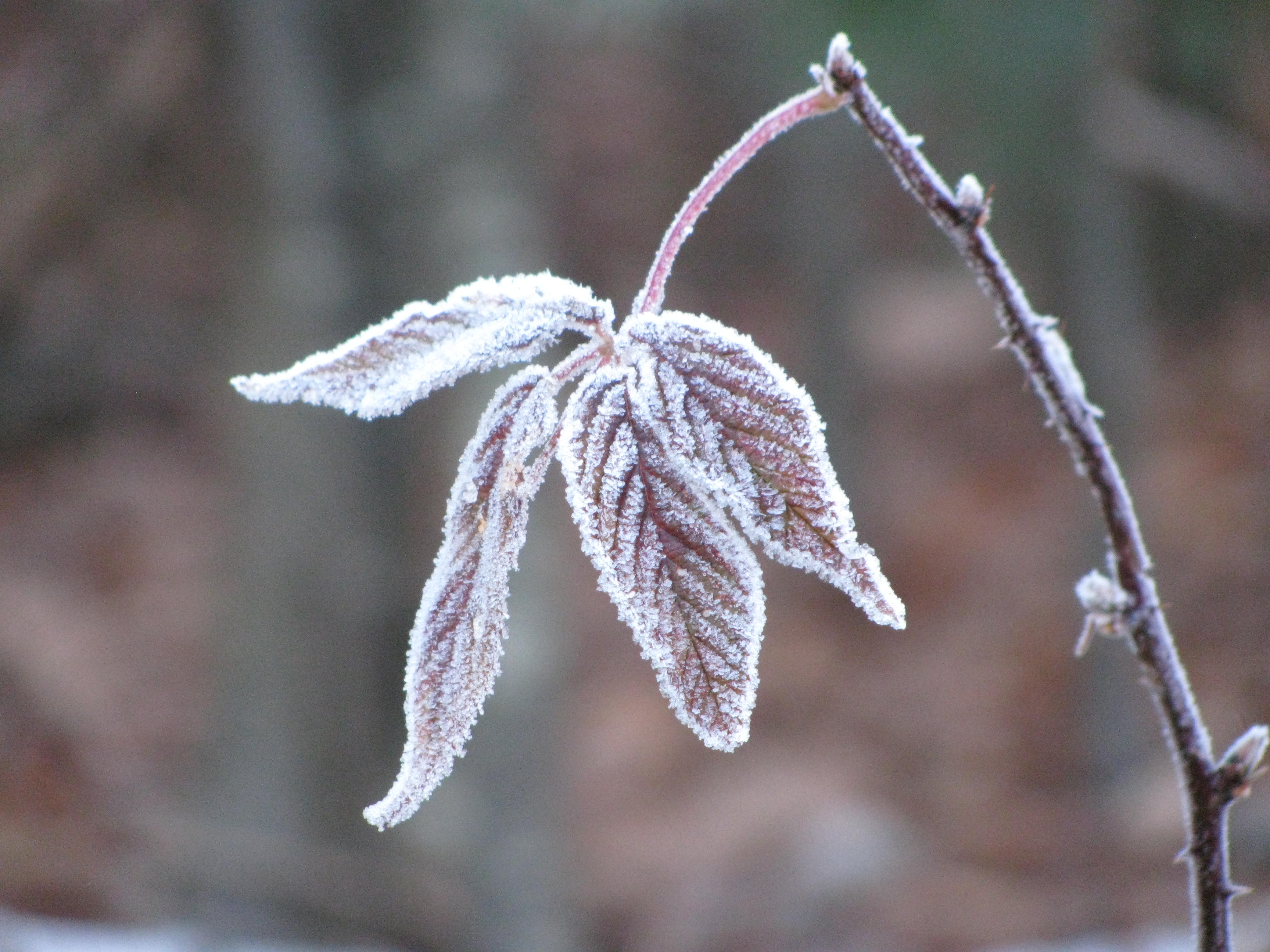
All last night, the leaves up in the canopy were fully exposed to the clear sky, open to the universe with nothing to hold in what little heat they might have absorbed beneath the clouds the day before.  That heat radiated away, the temperature dropped below freezing, and the foliage was coated with ice (whether white or clear, I can’t tell).  These are trees that can tolerate frost – they live in New England, after all.  Their leaves are about to die anyway, and frost will not kill them any faster.

When sunlight hit the leaves after dawn, the leaves quickly warmed above freezing and their coating of frost melted rapidly, dripping down to the leaves below (amazingly little hit the ground, or me).  And that’s what I heard, a false rain falling as frost released its grip.  The melting will end soon, but for the moment, it is a delightful mismatch of sky and sound as this bright, sunny day begins with rain.

Blog at WordPress.com.

Up ↑